
NEW DELHI / BRUSSELS — February 3, 2026
In what is being hailed as the “Mother of All Deals,” the formal conclusion of the India-EU Free Trade Agreement (FTA) negotiations on January 27, 2026, marks a seismic shift in global trade. After nearly two decades of stalled talks, the agreement—set to be implemented later this year—creates a combined market of nearly two billion people. While much of the early buzz has focused on Indian textile and engineering exports, the deal offers a transformative competitive edge for European manufacturers looking to penetrate the world’s fastest-growing major economy.
Tearing Down the “Great Wall” of Tariffs
For years, European industrial giants in the automotive, chemical, and machinery sectors faced some of the highest tariff barriers in the world. The new FTA fundamentally rewrites these rules.
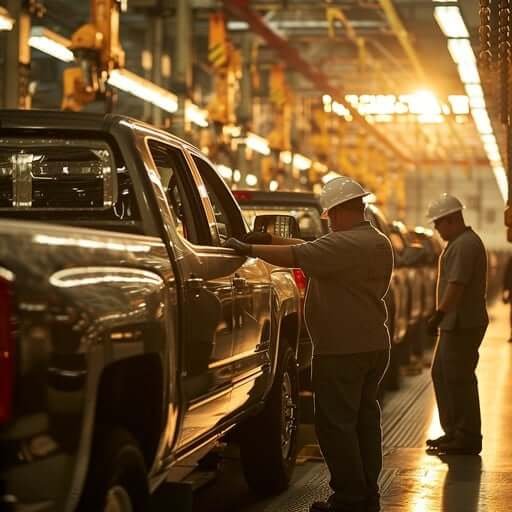
- Automotive Revolution: Perhaps the most significant win for European manufacturers is the phased reduction of India’s notorious import duties on passenger vehicles. Tariffs that once soared as high as 110% are slated to drop to 10% for a quota of up to 250,000 vehicles annually. This allows brands like Volkswagen, BMW, and Renault to introduce premium and luxury models at competitive price points.
- Engineering and Machinery: Under the pact, India is eliminating duties on over 92% of its tariff lines. For German and Italian machinery manufacturers, this means immediate or phased zero-duty access for high-tech industrial equipment, which previously faced barriers averaging 16%.
- Chemicals and Pharma: The Economic Times reports that import tariffs on chemicals from Europe will be slashed from 22% to zero, while pharmaceutical duties—previously at 11%—will also hit the floor.
Beyond the Price Tag: Strategic Supply Chains
The FTA isn’t just about selling finished goods; it’s about where those goods are made. By lowering duties on intermediate goods—such as aircraft parts, railway components, and electronic sensors—the deal incentivizes European firms to integrate India into their global value chains.
The Times of India notes that the agreement supports the “Make in India” initiative by making it cheaper for European companies to ship high-tech components to Indian assembly lines. This “China Plus One” strategy is further bolstered by the EU-India Security and Defence Partnership, which opens doors for co-production in aerospace and defense technology.
“This is a landmark moment. The FTA provides the predictable market access and regulatory cooperation that our manufacturers have craved for decades,” stated the European Automobile Manufacturers’ Association (ACEA) in a recent press release.
A Hedge Against Global Volatility
The timing of the deal is no coincidence. As trade tensions between the U.S. and both India and Europe escalate—characterized by 50% tariffs on certain Indian goods and renewed threats against EU exports—the FTA serves as a critical counter-cyclical buffer.
By diversifying away from an increasingly unpredictable U.S. market, European manufacturers gain a stable, rules-based foothold in an economy that recently surpassed Japan to become the world’s fourth-largest.
The Road Ahead: Compliance and Carbon
While the path to 2027 (when full implementation impact is expected) looks clear, challenges remain. EU manufacturers will benefit from simplified customs, but they must navigate India’s complex domestic regulations. Conversely, the PIB Factsheet highlights that Indian manufacturers are closely watching the EU’s Carbon Border Adjustment Mechanism (CBAM), which could impose costs on carbon-intensive imports.
Summary of Key Benefits for EU Industry
| Sector | Previous Tariff | FTA New Rate (Phased/Immediate) |
| Luxury Automobiles | 110% | 10% (under quota) |
| Machinery & Equipment | ~16% | 0% |
| Pharmaceuticals | 11% | 0% |
| Wines & Spirits | 150% | 20% – 50% |
| Aircraft/Spacecraft | 11% | 0% |
As legal “scrubbing” of the text continues through early 2026, European manufacturers are already recalibrating their boards. For the first time in a generation, the “Indian Opportunity” is no longer a distant prospect—it is a duty-free reality.
© 2026 33trillion.com