
In the high-stakes arena of global manufacturing, “input cost” is the silent architect of destiny. For India’s Micro, Small, and Medium Enterprises (MSMEs), which contribute nearly 30% of the country’s GDP and 45% of its exports, the cost of electricity has historically been a volatile shackle. In 2026, the traditional energy paradigm—built on the pillars of imported coal and sensitive nuclear dependencies—is being fundamentally re-evaluated. The transition to renewable energy (RE) is no longer just an environmental imperative; it is a strategic economic maneuver to de-risk Indian manufacturing and ensure that “Make in India” products are priced to win in a carbon-conscious world.
The Shadow of the Past: The Hidden Costs of Coal and Nuclear energy
For decades, coal has been the bedrock of India’s power grid, accounting for roughly 70% to 75% of the total electricity supply. However, this reliance comes with a staggering price tag. India’s coal import bill remains a significant drain on foreign exchange, exceeding $40 billion in the last Financial year. When translated to power generation, the fluctuating global prices of thermal coal can drive the cost of electricity up to ₹7–₹9 per unit for industrial consumers—a heavy burden for a small-scale textile mill or a precision engineering shop.
India’s primary coal partners—Indonesia, Australia, and South Africa—present their own sets of challenges:
- The Australian Friction: Past environmental protests like “Stop Adani” against projects like the Carmichael mine and tightening ESG (Environmental, Social, and Governance) norms in Australia serve to demonstrate the unreliability of foreign coal supply.
- The Nuclear Bottleneck: Nuclear energy, while clean, contributes a mere 2% to 3% of India’s power. The cost per MW is high due to massive upfront capital expenditure and a fuel bill that is vulnerable to geopolitics. Tense relations with Canada—a vital uranium supplier—have exposed the fragility of this supply chain. Similar tensions or “policy shifts” from other Nuclear Suppliers Group (NSG) partners like the US or France often leave India’s long-term nuclear roadmap in a state of suspended animation.
Lessons from the Giants: The China and Europe Shift
The blueprint for a manufacturing renaissance through renewables is already visible in the strategies of leading economies.
The Chinese Pivot
Over the last decade, China has executed the world’s most aggressive shift toward green energy. Once almost entirely coal-dependent, China now generates over 35-40% of its electricity from renewable sources (including hydro, wind, and solar). In 2025 alone, for the first time in 50 years, coal power generation fell in both China and India simultaneously due to record clean energy additions. The economic benefit for Chinese manufacturers is clear: localized, state-subsidized renewable grids provide stable, long-term pricing, insulating their SMEs from global fossil fuel shocks.
Europe’s Strategic Autonomy
Europe’s pivot, catalyzed by the urgency to decouple from Russian oil and gas, has centered heavily on offshore wind and solar. By reducing dependence on the Russian energy sector, European industrial hubs are finding that the marginal cost of wind and solar—which is near zero once the infrastructure is built—is drastically lowering the long-term cost per MW. This “Green Autonomy” has become a defensive shield for European industry against energy blackmail.
India’s Renewable Offensive: Policy and Infrastructure
Recognizing this shift, the Government of India has launched a multi-pronged offensive to move away from non-renewables.
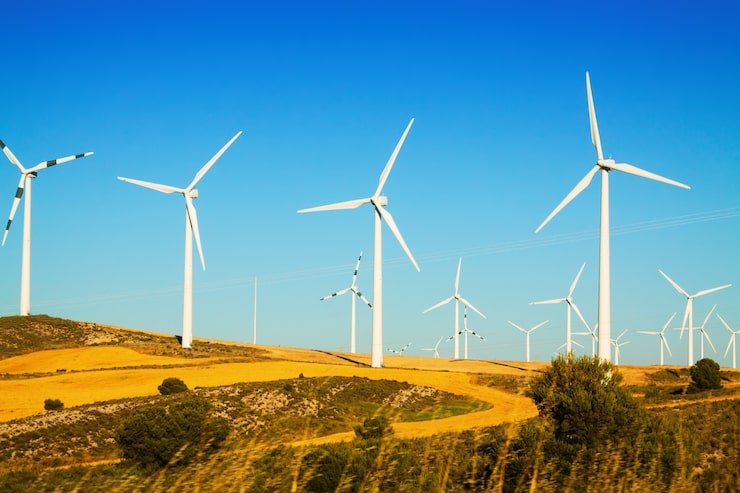
1. Solar and Wind Dominance: India has achieved a historic milestone of 100 GW of solar manufacturing capacity. The PM-Surya Ghar: Muft Bijli Yojana and PM-KUSUM are decentralizing power, allowing MSMEs to generate their own electricity. Major solar hubs in Rajasthan (Bhadla) and Gujarat (Khavda) are being complemented by massive wind farm expansions in Tamil Nadu and Karnataka.
2. The New Frontiers: Beyond the sun and wind, the Ministry of New and Renewable Energy (MNRE) is exploring geothermal energy in sites like the Puga Valley (Ladakh) and Tattapani (Chhattisgarh). Furthermore, the National Green Hydrogen Mission, with an outlay of nearly ₹20,000 crore, aims to decarbonize “hard-to-abate” sectors like steel and chemicals—sectors where SMEs are vital sub-contractors – and reduce the fossil fuel import bill by 1 lakh crore.
The 2027 Threshold: The India-EU FTA and Carbon Targets
The most pressing reason for MSMEs to embrace renewables is the 2027 Carbon Deadline. Under the newly inked India-EU Free Trade Agreement (FTA), Indian exports will face the EU’s Carbon Border Adjustment Mechanism (CBAM) which aims “to put a fair price on carbon emitted during the production of carbon-intensive goods that are entering the EU, and to encourage cleaner industrial production in non-EU countries”.
The Target: By 2027, Indian manufacturers must account for the carbon embedded in their products—especially in steel, aluminum, cement, and chemicals.
The Threat: High-carbon products will be slapped with “carbon tariffs,” wiping out the price advantage of Indian goods.
The Opportunity: The FTA grants India Most Favored Nation (MFN) status regarding CBAM flexibilities. If an Indian SME uses solar power to run its furnaces, it can claim “carbon credits” under India’s Carbon Credit Trading Scheme (CCTS). This allows the manufacturer ( or exporter) to pay a lower (or zero) carbon levy at the EU border, keeping their products globally competitive.
Conclusion: The MSME Advantage
The recalibration of input costs through renewable energy is the “secret sauce” for the next decade of Indian growth. By transitioning to a green grid, Indian manufacturers derive a triple benefit:
- Lower Operational Costs: Solar and wind tariffs are now consistently below ₹3 per unit, significantly cheaper than thermal power.
- Price Stability: Unlike coal or gas, the “fuel” (sun/wind) is free, protecting MSMEs from global inflation.
- Market Access: Lower carbon footprints allow Indian SMEs to leverage the 0% tariff access provided in FTAs with the EU, UAE, and Australia.
For Indian SME, the sun and wind move beyond being mere elements; they form the new “essentials” for global competition.
© 2026 33trillion.com