
The quest to build a green, digital future has one major gatekeeper: Rare Earth Elements (REEs). Often called the “vitamins” of modern industry, these 17 elements—like Neodymium, Dysprosium and lanthanum —are the key ingredients in permanent magnets used in a host of modern devices, like the vibration motor in an iPhone to the motors that propel an EV. While india holds the worlds third largest reserves of REEs – mainly in the sands of its coastal states, it lacks the technology and knowhow to extract these, inevitably leaning on China to secure its strategic future. Below is an analysis of India’s strategic pivot to break the Chinese monopoly and secure its own mineral sovereignty.
Why REEs matter
Though the term may suggest otherwise, rare Earths are not actually “rare,” but they are incredibly difficult to extract and process. Their value lies in their unique magnetic and electrochemical properties.
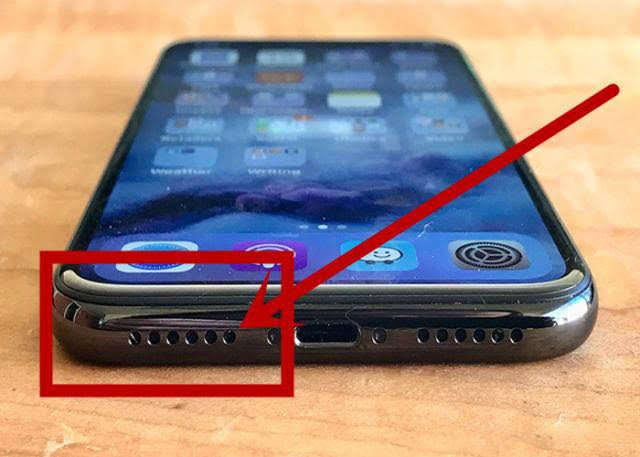
- Rare Earth Permanent Magnets (REPMs): Neodymium-Iron-Boron (NdFeB) magnets are the gold standard. They are essential for Electric Vehicles (EVs), high-efficiency wind turbines, Magnetic resonance Imaging (MRI) scanners and the precision motors in mobile phones.
- Defense & Aerospace: REEs are used in high-temperature resistance magnets, long lasting micro batteries and laser-crystal based optics for ‘smart’ weapons and aircraft, making the minerals a non-negotiable for national security.
The Economic Stakes: EVs, Mobiles, and Net Zero
India’s industrial ambitions are directly tethered to these minerals.
- The EV Engine: Under the PM E-DRIVE Scheme (which succeeded FAME II), India aims to incentivize nearly 2.5 million e-2Ws and thousands of e-buses by 2028. To meet these targets, the demand for REPMs is projected to double by 2030.
- Mobile Export Powerhouse: India is eyeing a $32 billion smartphone export target for FY26. Every device shipped is a “rare earth export” in finished form, requiring a steady supply of processed oxides.
- Carbon Decoupling: To avoid the “Carbon Border Adjustment Mechanism” (CBAM) taxes on exports and to comply with the domestic Carbon Credit and Trading Scheme (CCTS), India must green its supply chain.
Domestic production and import dependency
Although India possesses the 3rd largest rare earth reserves globally (~6.9 million tonnes of REO), yet ranks 7th in production as it currently lacks the up-to-scale technology to produce these, thus contributing less than 1% to global output. This is insufficient for India’s domestic manufacturing sector, especially in terms of meeting the ambitious $200bn EV export goal for 2030.
For years, India relied almost entirely on China to meet its industry needs. In FY25, India imported approximately 60-80% of its REPMs by value and up to 93% by quantity from China, with the import bill at $221 million.
The 2025 Shock: In late 2025, China weaponized its dominance by implementing strict export curbs on rare earth extraction technology and components containing more than 0.1% REEs. With existing stocks set to last less than 3 weeks, this sent the Indian auto into panic mode, leading to production delays and a 10-15% spike in logistics costs as firms scrambled for alternatives. According to the Open Magazine, export of components containing trace (less than 0.1%) amounts of REEs required government approval and this even extended to products made outside its borders (Japan, Vietnam, South Korea) but using China sourced REEs.
The Turnaround Strategy for self reliance
India’s REE exploration started in 1950 with the setting up of IRE (Indian Rare Earth now IREL) under the Department of atomic energy (DAE), primarily to extract the mineral monazite, a source of the nuclear element Thorium. In 2024, the government launched the National Critical Mineral Mission (NCMM) in 2024 to expedite the search for RE minerals. This initiative has led to the fast-tracked auction of 24 critical mineral blocks (including REEs mines) as also to the acquisition of overseas REE mineral blocks in Argentina and Australia through Public sector consortium KABIL.
Financial Muscle: A ₹7,280 crore REPM Manufacturing Scheme was launched in November 2025 to create a 6,000 MTPA (Metric Tonnes Per Annum) integrated capacity.
In addition Budget 2026 announcements concerning mining and processing corridors and subsidies have aimed to promote REE exploration and extraction.
- Dedicated Rare Earth Corridors: These corridors in Odisha, Kerala, Andhra Pradesh, and Tamil Nadu will integrate mining, processing, and manufacturing.
- Subsidies: A ₹750 crore capital subsidy in terms of waiving the 7.5% Basic custom duty (BCD) on the import of high-tech equipment required for the REE separation process—a notoriously toxic and complex stage of the value chain. This subsidy is ultimately expected to help reduce the cost of domestically extracted REEs, making them competitive with Chinese imports.
Friendshoring: The African and American Connect
To bypass the “Malacca Dilemma” (referring to the straits of Malacca near Singapore, through which Chinese imports sail) of mineral trade, India is looking toward friendly, resource-rich nations.
- Brazil: Holding the world’s 2nd largest reserves, Brazil is a natural partner for a South-South mineral alliance.
- Africa: Countries like Namibia, Tanzania, Zambia and South Africa offer high-grade deposits that are closer and less geopolitically fraught than Chinese sources.
- Strategic Partnerships for mineral exploration: Besides India, other countries such as US, Australia, Japan and the EU – which recognise China’s inclination to use its REE reserves as a tool for global dominance – realise the need to form alliances to ensure economic and strategic security.Through the US-led Minerals Security Partnership (MSP) and the India-US COMPACT initiative, India is collaborating with the US and 12 other countries in critical mineral exploration as well as in the development of processing technology.
Innovation and technology collaboration
According to a BBC report, India has a surplus of lighter REEs like Neodymium, but lacks extractable quantities of heavier elements like Dysprosium and Terbium, needed to make high performance magnets. The challenge therefore lies in innovative manufacturing to make the best use of what is available.
- Ferrite Magnets: Companies like Mahindra have already begun redesigning motors to use ferrite-based alternatives, which are cheaper and more abundant, though less power-dense.
- Bengaluru based Chara technologies, uses Synchronous Reluctance motor (SynReM) technology wherein no Rare earth magnets are used, making the motors cheaper by 40%.
- Indian EV firm Matter tied with US magnetics firm Niron is developing Iron Nitride magnets which help produce motors lighter than SynReMs, making them suitable for body worn exoskeleton robots.
- Viridian Ingni Propulsion (Chennai): They use a Hybrid Reluctance model that uses a small amount of Ferrite to “assist” the motor. This provides a “best of both worlds” solution: it’s cheaper than Chinese motors but lighter than pure magnet-free designs.
- Tech Collaboration: India is working with Japan (through Visakhapatnam-based JVs) and the Non-Ferrous Materials Technology Development Centre (NFTDC) to master “Heavy REE” separation, a technology China has guarded closely.
Summary: Production requirements and a reality check
With the exponential advancement of pioneering technology and products involving Rare Earth permanent magnets, REE extraction forms the cornerstone of Atmanirbhar Bharat in the commercial and defence sectors. Production will need to keep pace with increased demand and also be cost-competitive with cheaper Chinese imports to break the latters monopoly and weaponisation during conflicts.
Are targets realistic? Establishing a 6,000 MTPA capacity by 2028 is ambitious but possible if the private sector (like the Adani Group’s proposed ₹23,000 crore complex in Andhra pradesh) steps in. Self-sufficiency? Total self-sufficiency is a long shot. However, strategic autonomy through alliances and technology sharing with partners—where India produces enough for its own defense needs and 50% of commercial manufacturing (EVs, phones) —is within reach by 2032.
© 2026 33trillion.com