
The finalization of the India-European Union Free Trade Agreement (FTA) in early 2026 marks a historic pivot in global trade. While the deal is projected to nearly double bilateral trade to over $200 billion by 2030, it presents a complex macroeconomic paradox for India. As Indian exporters scramble to fulfill demand in high-value, zero-duty European markets, the diversion of supply could trigger structural domestic inflation.
Capital Goods: The “Tariff-Free” Pull
Engineering and capital goods represent one of the EU’s largest import categories from India. With the FTA eliminating tariffs of up to 44% on machinery and electrical equipment, domestic manufacturers now face a powerful incentive to prioritize European contracts.
The Inflationary Mechanism: As manufacturers shift production capacity toward high-margin European exports, domestic “waiting periods” for essential machinery are expected to rise.
Paradoxically, while India itself exports capital goods such as Iron and steel, the import of waste and scrap metal – key feedstocks for India’s resource starved recycling industry and MSMEs – could actually have a disinflationary effect according to a report by think tank GTRI.
Result: A supply-side crunch in the Indian industrial sector, leading to higher procurement costs for local MSMEs, which eventually trickles down to consumer prices. A disinflationary trend depends on the actual, post FTA costs of imports such as ferrous, aluminium and brass scrap.
Consumables and “High-Value” Divergence
While India has strategically excluded sensitive items like cereals (wheat/rice) and dairy from tariff concessions to protect food security, other high-export consumables are vulnerable.
Tea, Coffee, and Spices: These sectors gain 100% preferential access. High European purchasing power often allows EU buyers to outbid domestic retailers.
Sugar and Edible Oil: Although partially protected, the “value-added” variants (organic or processed versions) are seeing a massive export pull. If the domestic “surplus” is exported too aggressively, retail prices in India could spike, as seen in the 2022-2023 cycles.
The Glittering Cost: Gold and Jewellery
The Gems & Jewellery Export Promotion Council (GJEPC) expects trade in this sector to double to $10 billion within three years due to the removal of the 2-4% EU import duties.
Impact on Domestic Prices: India is a major hub for gold and diamond processing. As artisanal and machine-made jewellery flows toward premium markets in France and Italy, domestic labor costs for jewellery making are likely to rise. Furthermore, the increased demand for raw materials (gold/silver) to fulfill export orders can create a “premium” on immediate local availability.
The “Horticultural Drain”: Vegetables and Fruits
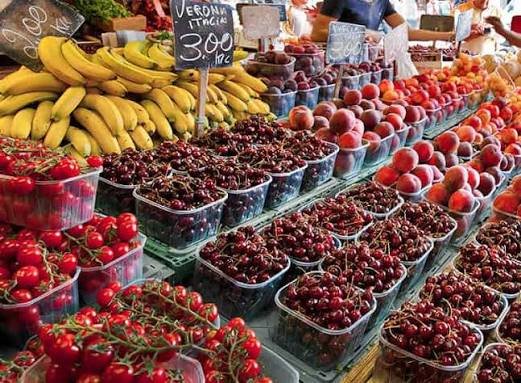
A noteworthy shift under the FTA is the surge in dried vegetables, canned fruits, and processed horticulture.
Vegetable Inflation: European demand for “preserved” and “dried” vegetables—which enjoy zero-duty entry—encourages Indian processors to buy fresh produce in bulk from local mandis.
The Conundrum: This “industrial demand” competes directly with the common man’s kitchen basket. When a significant portion of the tomato or onion crop is diverted to canning factories for export to Germany, the local shelf price inevitably rises.
Government Safeguards: Lessons from the Past
The Government of India (GoI) is acutely aware of the “Export vs. Inflation” trade-off. Historically, the government has used Export Bans (e.g., the 2022-2023 bans on wheat and broken rice, and the 2023 restriction on sugar exports) to stabilize prices.
Steps to Mitigate Capital Goods Inflation:
- Export Duties: Implementing calibrated export taxes on critical industrial components if domestic shortages occur.
- Production Linked Incentives (PLI): Encouraging capacity expansion so that the “export surplus” does not come at the expense of domestic supply.
- Bilateral Safeguard Mechanism: The FTA includes a 22-year transition period allowing India to reimpose duties if an import surge (or export drain) threatens domestic stability.
The “Import Subsidy” Effect: Pharmaceuticals and Tech
Conversely, the FTA acts as a disinflationary force in specific high-value sectors. The EU is a major exporter of pharmaceuticals (11% current duty) and medical devices (up to 27.5% duty).
- Healthcare Savings: According to Mankind Pharma CEO Sheetal Arora and the Medical Technology Association of India, reducing these duties to zero will make advanced European medicines and surgical equipment more affordable in India.
- Industrial Inputs: The removal of duties on EU-made chemicals and high-tech components will lower the “input cost” for Indian manufacturers, potentially offsetting some of the inflation in the capital goods sector.
Strengthening the Rupee: The Currency Cushion
One of the strongest long-term benefits of the FTA is the stabilization of the Indian Rupee (INR). As of February 2026, the Rupee has shown a rebound toward ₹90 per Dollar following the FTA and subsequent trade optimism.
- Dollar Inflows: Increased exports and sustained Foreign Direct Investment (FDI) from the EU create a steady demand for the Rupee.
- Stabilization: A stronger INR makes “imported inflation” (like crude oil and gas) cheaper. If the Rupee strengthens by 2-3% due to the FTA, it provides a natural hedge against the domestic price rises mentioned above.
The following table summarizes the competing inflationary and disinflationary forces triggered by the FTA across key domestic sectors.
| Sector | Primary Driver | Projected Domestic Price Impact | Reason / Mechanism |
| Capital Goods | High Export Pull | Mixed/ Uncertain | Manufacturers prioritize high-margin EU contracts; local MSMEs face supply crunches and longer lead times. Imports of goods such as scrap metal acts as a counterbalance. |
| Consumables (Tea, Coffee, Spices) | Preferential Access | Inflationary (Upward) | EU buyers with higher purchasing power outbid domestic retailers for premium stocks. |
| Wheat, Rice, Dairy | Excluded from FTA | Neutral / Controlled | Government-mandated “exclusion list” prevents sudden supply shocks via exports. |
| Horticulture (Dried/Canned) | Value-Added Exports | Inflationary (Upward) | Local mandis face bulk competition from export-oriented processing units (canning/drying). |
| Gems & Jewellery | Zero-Duty Entry | Inflationary (Upward) | Increased demand for raw gold/silver for exports; rising labor costs in local jewellery hubs. |
| Pharmaceuticals | High-Value Imports | Disinflationary (Downward) | Elimination of duties (up to 11%) on EU-made drugs and life-saving equipment reduces retail costs. |
| Med-Tech & Chemicals | High-Value Imports | Disinflationary (Downward) | Cheaper EU inputs lower production costs for domestic manufacturing units. |
Conclusion
The Indo-EU FTA is a double-edged sword for inflation. While it risks “exporting” domestic supply in the food and engineering sectors, it “imports” price relief in healthcare and technology. The net effect will depend on the GoI’s ability to balance the “Export Scramble” with timely domestic supply-side interventions.
© 2026 33trillion.com